
Shoulder pain from rotator cuff tendinopathy? Discover how physiotherapy, exercise, shockwave therapy, and injections can help restore strength and improve movement.
What is it?
The rotator cuff is a group of muscles and tendons that stabilise your shoulder. The cuff is often regarded as the steering wheel of the shoulder, guiding the movement in all planes. Tendinopathy occurs when one or more of these tendons become irritated, leading to shoulder pain, especially when lifting the arm overhead or reaching behind your back.
Who does it affect?
Overhead athletes: swimmers, tennis players, cricketers, volleyball players.
Gym-goers, particularly with heavy lifting or poor technique.
Adults over 40, due to age-related tendon changes.
How physiotherapy can help
Exercise therapy:
A structured program of strengthening is the cornerstone of recovery. Targeted exercises for the rotator cuff and the shoulder blade muscles help restore stability and balance around the joint. These exercises are gradually progressed to match your goals — from daily tasks to returning to sport.
Shockwave therapy:
For pain that doesn’t improve with exercise alone, shockwave therapy can be an option. It uses sound waves to stimulate blood flow and healing in the tendon. Many people find it particularly helpful when symptoms have lasted for several months.
Diagnostic ultrasound:
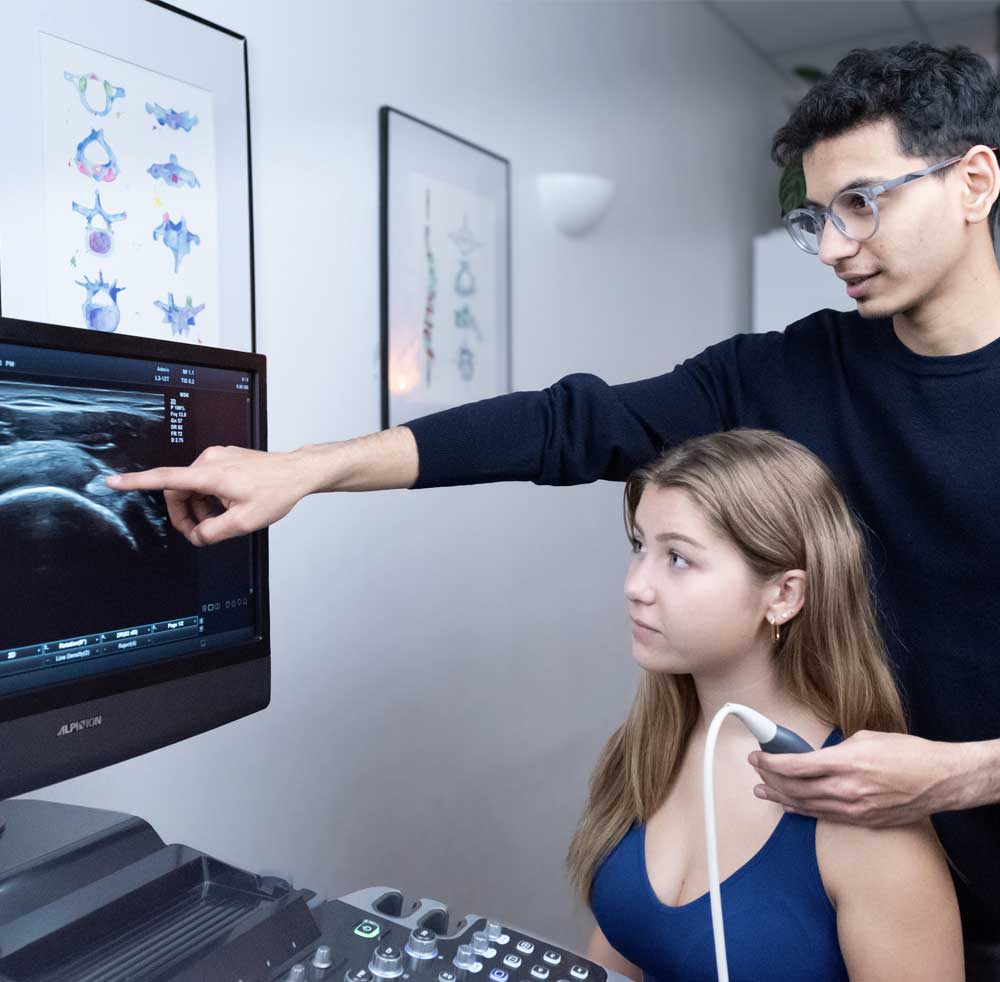
Ultrasound scanning can give a clear picture of the shoulder tendons. It helps your physiotherapist confirm exactly which tendon is affected, the severity of the changes, and whether other issues are contributing to your pain. This ensures your treatment is tailored to you.
Injection therapy:
In some stubborn cases, an injection may be recommended in conjunction with physiotherapy. Corticosteroid injections can provide short-term pain relief, creating a window of opportunity for rehab exercises. These treatments are most effective when combined with exercise and rehab.
Other physiotherapy treatments:
Hands-on manual therapy can improve stiffness in the shoulder and upper back, making movement easier. Postural retraining can reduce strain on the tendons during daily activities and sports. Your physio will also guide you on safe activity modification, helping you stay active while avoiding movements that aggravate the shoulder.
Take-home message
Rotator cuff tendinopathy responds well to rehabilitation and targeted strengthening exercises. With the right plan, you can regain pain-free shoulder movement and return to sport.
References
Rotator Cuff Tendinopathy Diagnosis, Nonsurgical Medical Care, and Rehabilitation: A Clinical Practice Guideline François Desmeules, Jean-Sébastien Roy, Simon Lafrance, Maxime Charron, Marc-Olivier Dubé, Frédérique Dupuis, Jason M. Beneciuk, Jason Grimes, H. Mike Kim, Martin Lamontagne, Karen McCreesh, Ellen Shanley, Tatiana Vukobrat, and Lori A. Michener Journal of Orthopaedic & Sports Physical Therapy 2025 55:4, 235-274
Vila-Dieguez O, Heindel MD, Awokuse D, Kulig K, Michener LA. Exercise for rotator cuff tendinopathy: Proposed mechanisms of recovery. Shoulder & Elbow. 2023;15(3):233-249. doi:10.1177/17585732231172166
What’s in a Name? The Case for Using “Rotator Cuff–Related Shoulder Pain” in Clinical Practice Jeremy Lewis, Paul E. Mintken, and Amy W. McDevitt Journal of Orthopaedic & Sports Physical Therapy 2025 55:7, 451-453