
My hips hurt… is it gluteal tendinopathy? Discover how physiotherapy, exercise, shockwave therapy, and injections can help you get back to walking, running, and sleeping comfortably.
What is it?
Gluteal tendinopathy is irritation of the tendons on the side of the hip, usually where the gluteus medius and minimus attach. It often causes pain when lying on your side, climbing stairs, or standing on one leg.
Who does it affect?
- Runners and walkers, especially middle-distance runners.
- Middle-aged women, particularly around menopause.
- People who sit for long hours or stand with their hips shifted out to one side ortheir legs crossed.
How physiotherapy can help
- Exercise therapy:
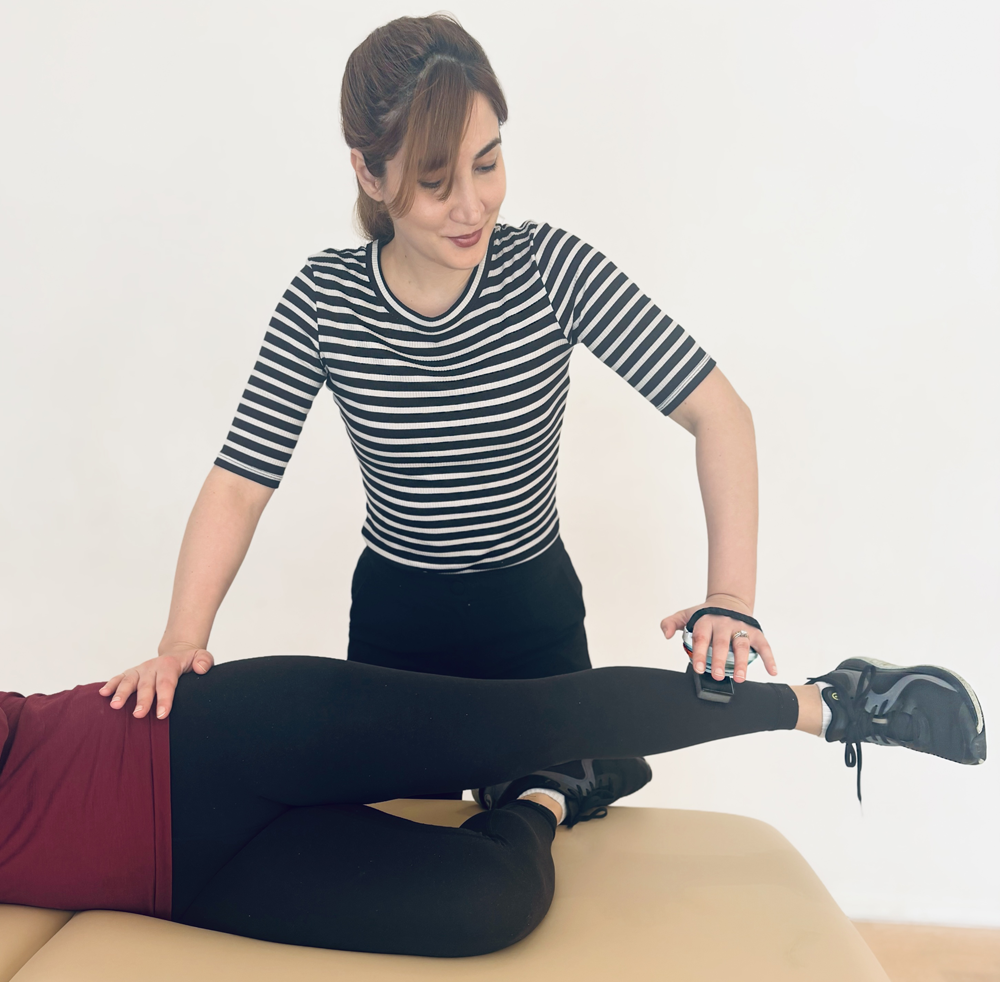
Strengthening the gluteal and hip muscles is the most effective way to treat this condition. Specific exercises improve hip stability and reduce stress on the tendon. Your physio will progress your program step by step, ensuring movements are safe and effective. - Shockwave therapy:
For long-standing or persistent hip pain, shockwave therapy can be added. It promotes tendon healing and reduces pain, making it easier to perform strengthening exercises. This is particularly useful if symptoms have been present for months. - Diagnostic ultrasound:
Ultrasound scanning can confirm whether the gluteal tendons are affected and assess their condition. This rules out other potential tendon tears and other causes of hip or buttock pain, ensuring your treatment is correctly targeted. - Injection therapy:
An ultrasound-guided steroid and analgesic injection may be an option if the pain is severe or if rehab alone isn’t enough. This can help reduce irritation around the tendon in the short term, giving you a window to strengthen effectively. - Other physio treatments:
Hands-on therapy can enhance hip and lower back mobility, making exercise more manageable. Taping or retraining your movement patterns can help alleviate pressure on the tendon. Your physiotherapist may also provide advice on optimal sleeping positions and simple lifestyle changes to help reduce irritation at home.
Take-home message
Gluteal tendinopathy is manageable with tailored exercises, lifestyle adjustments, and physio treatments. Most people return to comfortable walking, running, and sleeping.
References
Grimaldi, A., Mellor, R., Hodges, P., Bennell, K., Wajswelner, H., & Vicenzino, B. (2015). Gluteal Tendinopathy: A Review of Mechanisms, Assessment and Management. Sports medicine (Auckland, N.Z.), 45(8), 1107–1119. https://doi.org/10.1007/s40279-015-0336-5
Grimaldi, A., Nasser, A., Mellor, R., & Vicenzino, B. (2025). An examination of imaging findings in patients with clinically diagnosed gluteal tendinopathy: a secondary analysis of a randomised clinical trial. Archives of orthopaedic and trauma surgery, 145(1), 347. https://doi.org/10.1007/s00402-025-05964-z
Ladurner A, Fitzpatrick J, O’Donnell JM. Treatment of Gluteal Tendinopathy: A Systematic Review and Stage-Adjusted Treatment Recommendation. Orthop J Sports Med. 2021 Jul 29;9(7):23259671211016850. doi: 10.1177/23259671211016850. PMID: 34377713; PMCID: PMC8330465.