
Knee Osteoarthritis
Guided Injections.
Injections for Knee Osteoarthritis
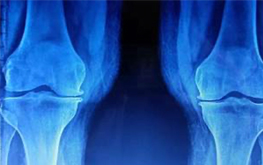
Knee osteoarthritis (OA) is a degenerative condition in which the joint surfaces wear down and become damaged. The inner aspect of the tibiofemoral joint is most affected, but the patella-femoral joint can also be impacted.
This condition is most common in older adults, with a prevalence of 23% in individuals aged 60 and older. Knee OA also reduces the joint space, hindering fluid movement. This results in pain and disability among those affected. Knee OA can also affect other individuals, such as those with congenital deformities, traumatic knee injuries, metabolic conditions, and infections (Jiang et al., 2023).
What are the common symptoms of this?
- Difficulty walking due to pain and reduced range of motion in the knee
- Stiffness in the morning lasting less than 30 minutes
- Pain and stiffness after long periods of rest, such as sitting and sleeping
- Pain, tenderness, and swelling around the joint
- Development of bony lumps or deformities in the joint
- Weakness of the muscles surrounding the knee
- Clicking and/or grinding sensation with movement of the knee
(Rapaso et al., 2021)
How is this diagnosed?
To assess your condition, your physiotherapist will ask about your symptoms and conduct a physical examination, looking for the following:
- Reduced range of motion and stiffness in the knee joint
- Pain, tenderness or swelling, especially along the medial joint line of the knee
- Reduced strength of the knee
- Bony changes felt along the joint line
- Limping or abnormal gait pattern
- Grinding or creaking sensations with movement of the joint
Your physiotherapist may also recommend imaging tests, such as X-rays, to assess joint surface integrity, joint space narrowing, bone growths, and other bone changes.
Treatment options
Guided Corticosteroid Injections
For persistent pain, corticosteroid injections may be recommended to reduce inflammation and provide short-term relief.
Guided Hyaluronic Acid Injections
For persistent pain, corticosteroid injections may be recommended to reduce inflammation and provide short-term relief.
Your Clinician


BSc Physiotherapy MSCP (Hons)
PGCert Independent Medical Prescriber
PGCert Soft Tissue and Joint Injection Therapist
PGCert Diagnostic Ultrasound
Mo, L., Jiang, B., Mei, T., & Zhou, D. (2023). Exercise therapy for knee osteoarthritis: A systematic review and network meta-analysis. Orthopaedic journal of sports medicine, 11(5), 23259671231172773.
Raposo, F., Ramos, M., & Lúcia Cruz, A. (2021). Effects of exercise on knee osteoarthritis: A systematic review. Musculoskeletal care, 19(4), 399-435.