
What is Patellofemoral Pain Syndrome (PFPS)?
Also known as ‘runner’s’ knee’, patellofemoral pain syndrome is a term that describes pain around or behind your kneecap (patella) and surrounding tissues. It affects approximately ¼ of the general population and is more common in women and athletes with high-impact or repetitive sports such as running, tennis, and basketball. Diffuse knee pain may indicate inflammation of the cartilage behind your patella, which can cause long-term damage and pain if not treated properly.
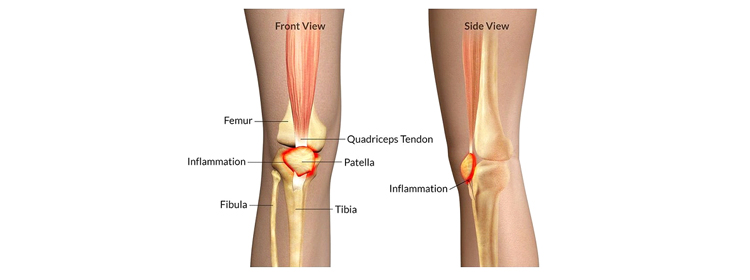
Common Signs & Symptoms of PFPS
Pain around or behind the kneecap (patella), usually achy and dull but can be sharp.
Especially prevalent during
⦁ Squatting or kneeling
⦁ Walking up or down stairs
⦁ Sitting with bent knees for extended periods (long car trips or at the cinema)
⦁ During or after repetitive activities like running
⦁ Walking on uneven terrain
Causes of PFPS
Patellofemoral pain syndrome is often a combination of poor biomechanics of the knee joint due to muscle imbalances and weakness, along with repetitive overuse of the knee joint (such as running, jumping, or squatting). Collectively, they can cause the kneecap (patella) to track improperly in its groove and rub against surrounding structures, which causes inflammation and pain. It is associated with weakness in your thigh (quadriceps) and bottom muscles (glutes). It can also be related to issues with foot position (overpronation or supination) and certain types of footwear, including high heels.
It usually occurs after a sudden increase in your current activity/training or starting a new physical activity too quickly. Still, it can also come on after trauma, such as falling onto your knee.
How can Physiotherapy help you?
A physiotherapist can confirm a diagnosis of patellofemoral pain syndrome and determine the reasons/causes behind why you may have developed this injury. This will help guide your treatment plan, which includes education, tailored exercises, and manual therapy necessary for your long-term recovery. We aim to relieve pain and strengthen your body to prevent future injury. Your physiotherapist can guide you on when you can return to walking and running.
Physiotherapy for PFPS typically includes strength training to correct muscle weakness, education about adjusting your current activities to reduce pain and injury, pain management techniques, and advice on healing. Your physiotherapist can help you design a training program specific to your lifestyle, help prevent further damage to your lower body joints and protect the function of your knee.
Treatment Options
References
Neal, B. S., Lack, S. D., Lankhorst, N. E., Raye, A., Morrissey, D., & van Middelkoop, M. (2019). Risk factors for patellofemoral pain: a systematic review and meta-analysis. British journal of sports medicine, 53(5), 270–281.LINK
Lankhorst, N. E., Bierma-Zeinstra, S. M., & van Middelkoop, M. (2013). Factors associated with patellofemoral pain syndrome: a systematic review. British journal of sports medicine, 47(4), 193–206. LINK
Garza-Borjón, A., González-González, M., de la Garza-Salazar, J. F., Simental-Mendía, M., & Acosta-Olivo, C. (2024). Understanding the patho-anatomy of Patellofemoral Pain: A crucial foundation for comprehensive management. Orthopedic Reviews, 16. https://doi.org/10.52965/001c.125840 LINK