
What is a Stress Fracture?
Stress fractures are small cracks in the bone that develop gradually over time due to repetitive load and stress onto a bone. Stress fractures are most common in the feet and lower legs (tibia). They can cause significant pain or discomfort.
Common Signs & Symptoms
- Pain in the lower leg that worsens over time and doesn’t go away with rest
- Swelling and/or painful to the touch
- Pain during and after activities, especially high-impact
- Usually specific to a small area rather than the whole lower leg
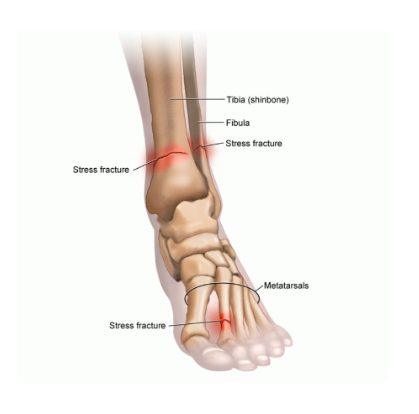
Causes
Stress fractures are an overuse injury and may be caused by a combination of:
- Overtraining repetitive exercise, such as running or jumping
- Poor rest periods between activities
- Osteoporosis and/or poor nutrition
How can Physiotherapy help you?
A physiotherapist can help to confirm your diagnosis and provide appropriate treatment.
- Design a program to help address biomechanical issues
- Education and advice on activity and load modification for bone health and long-term management
- Screen you for risk factors associated with this and give you advice about how to mitigate future issues.
- Manual therapy and modalities to reduce pain and symptoms and optimise healing
- Once the bone is healed, physiotherapy can help you regain your strength movement and strengthen the joint and surrounding tissues.
References
May T, Marappa-Ganeshan R. Stress Fractures. [Updated 2023 Jul 10]. In: StatPearls [Internet]. Treasure Island (FL): StatPearls Publishing; 2025 Jan LINK
Hadjispyrou, S., Hadjimichael, A. C., Kaspiris, A., Leptos, P., & Georgoulis, J. D. (2023). Treatment and Rehabilitation Approaches for Stress Fractures in Long-Distance Runners: A Literature Review. Cureus, 15(11), e49397.LINK
Robertson, G. A., & Wood, A. M. (2017). Lower limb stress fractures in sport: Optimising their management and outcome. World journal of orthopaedics, 8(3), 242–255. LINK