
Calcific tendinopathy
Guided Injections.
Calcific Tendinopathy: Ultrasound-Guided Steroid Injection & Barbotage for Effective Relief
Calcific tendinopathy is a painful condition caused by calcium deposition in the rotator cuff tendons. It often leads to inflammation, shoulder stiffness, and significant discomfort. If conservative treatments like physiotherapy and anti-inflammatory medications are ineffective, ultrasound-guided corticosteroid injections and barbotage can provide effective relief.
Understanding Calcific Tendinopathy
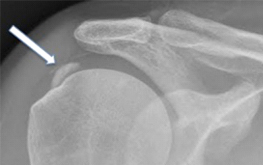
Calcific tendinopathy occurs when calcium deposits form in the rotator cuff tendons, leading to pain and reduced shoulder mobility. The condition is most commonly seen in individuals aged 30-60 years and can occur spontaneously without a clear cause.
Common Symptoms:
- Sudden or chronic shoulder pain
- Limited range of motion
- Night pain, mainly when lying on the affected shoulder
- Stiffness and discomfort during arm movements
Ultrasound-Guided Corticosteroid Injection for Calcific Tendinopathy
Corticosteroid injections help reduce inflammation around the calcium deposits, relieve pain and improve shoulder function. Ultrasound guidance ensures precise delivery of the medication into the inflamed area.
Benefits of Corticosteroid Injections
- Rapid pain relief (within days) (Arroll & Goodyear-Smith, 2005)
- Reduces inflammation, making movement easier (Coombes et al., 2010)
- Enhances physiotherapy outcomes by minimising discomfort
- Minimally invasive alternative to surgery
Ultrasound-Guided Barbotage for Calcium Removal
Barbotage is a minimally invasive procedure that breaks down and removes calcium deposits from the tendon. It involves inserting a needle into the calcium deposit and flushing it with saline to dissolve and extract the calcium.
Benefits of Barbotage
- Removes calcium deposits, addressing the root cause of pain.
- Reduces shoulder stiffness and improves function
- Minimally invasive with a high success rate
- Short recovery period compared to surgery
- What to Expect During the Procedures
Barbotage Procedure:
A fine needle is inserted into the calcium deposit using ultrasound guidance. A saline solution is injected to break down the calcium, and then the dissolved calcium is aspirated using a syringe. A corticosteroid may be administered afterwards to reduce inflammation in the shoulder joint.
Who Can Benefit from These Treatments?
These procedures are ideal for individuals who:
- Have persistent shoulder pain despite physiotherapy and medications
- Have significant calcium deposits seen on ultrasound imaging
- Want to avoid or delay surgical intervention
How Effective Are These Treatments?
Studies have shown that:
Corticosteroid injections provide significant pain relief but do not remove the calcium deposits.
Barbotage successfully eliminates calcium deposits in 60-90% of cases, leading to long-term improvement.
Treatment options
Guided Corticosteroid Injections
For persistent pain, corticosteroid injections may be recommended to reduce inflammation and provide short-term relief.
Your Clinician


BSc Physiotherapy MSCP (Hons)
PGCert Independent Medical Prescriber
PGCert Soft Tissue and Joint Injection Therapist
PGCert Diagnostic Ultrasound
References
Mohamadi, A., Chan, J. J., Claessen, F. M., Ring, D., & Chen, N. C. (2017). Corticosteroid injections give small and transient pain relief in rotator cuff tendinosis: a meta-analysis. Clinical Orthopaedics and Related Research®, 475(1), 232-243
Bazzocchi, A., Pelotti, P., Serraino, S., Battaglia, M., Bettelli, G., Fusaro, I., … & Albisinni, U. (2016). Ultrasound imaging-guided percutaneous treatment of rotator cuff calcific tendinitis: success in short-term outcome. The British Journal of Radiology, 89(1057), 20150407.
de Witte, P. B., Kolk, A., Overes, F., Nelissen, R. G., & Reijnierse, M. (2017). Rotator cuff calcific tendinitis: ultrasound-guided needling and lavage versus subacromial corticosteroids: five-year outcomes of a randomized controlled trial. The American journal of sports medicine, 45(14), 3305-3314.
del Cura, J. L., Torre, I., Zabala, R., & Legórburu, A. (2007). Sonographically guided percutaneous needle lavage in calcific tendinitis of the shoulder: short-and long-term results. American Journal of Roentgenology, 189(3), W128-W134
Arroll, B., & Goodyear-Smith, F. (2005). Corticosteroid injections for painful shoulder: a meta-analysis. British Journal of general practice, 55(512), 224-228.
Uhthoff, H. K., & Loehr, J. W. (1997). Calcific tendinopathy of the rotator cuff: pathogenesis, diagnosis, and management. JAAOS-Journal of the American Academy of Orthopaedic Surgeons, 5(4), 183-191.